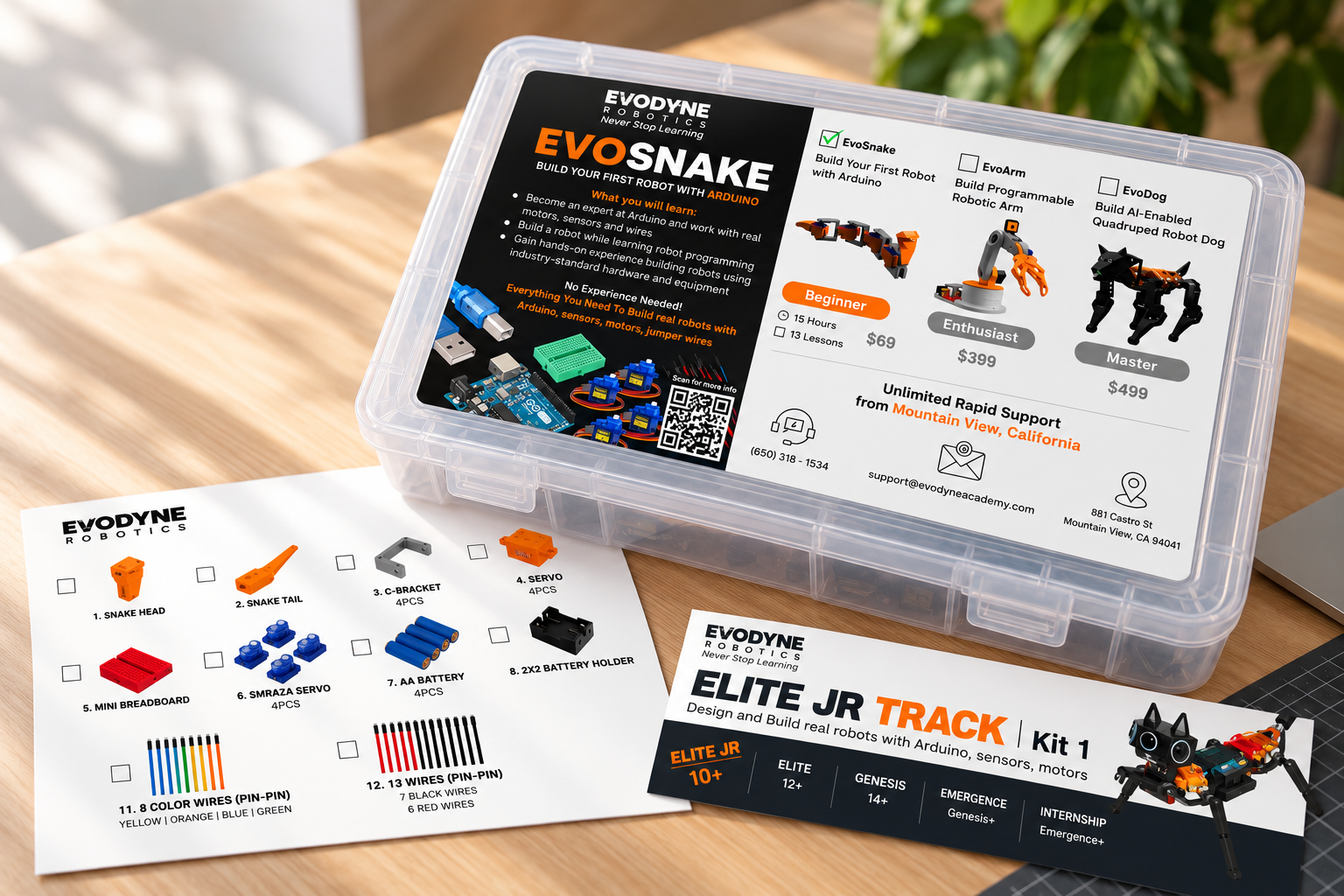
Educational Kit Packaging Redesign
Evodyne Robotics offers educational robotics kits designed to make hands-on STEM learning accessible and engaging. This project focused on redesigning kit labels and packaging to establish a more consistent visual identity, improve product recognition, and create a professional, cohesive appearance across the product lineup.
The redesigned packaging balances clear product information with Evodyne's established brand identity, creating a scalable design system that supports both existing and future robotics kits.
Project Scope
Kit Label Kit Content Checklist
Packaging Flyer
My Role
Lead Graphic Designer
Visual identity · Marketing · Packaging
SELF-PACED KIT
A complete packaging experience designed to support independent robotics learning, from product identification to unboxing
01 / KIT LABEL REDESIGN
From a Simple Label to a Complete Story
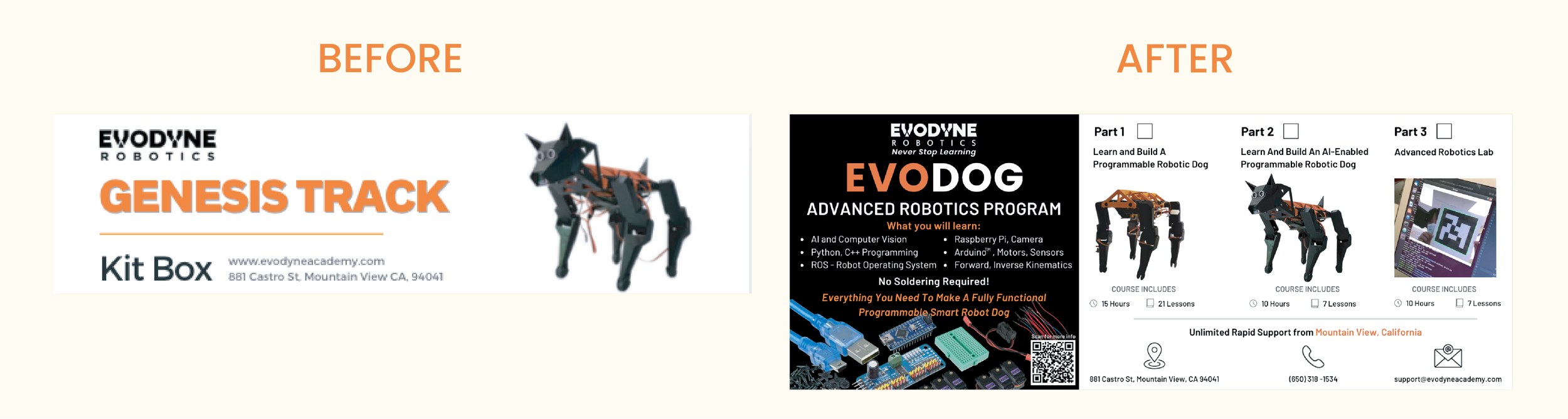
The original label provided basic product identification but lacked visual hierarchy and detailed information. The redesign expands the label to communicate the full learning experience, key features, and course structure at a glance
The Challenge
The original packaging lacked clear information hierarchy and provided limited insight into the kit's educational value. The challenge was to improve product communication while creating a consistent visual experience across multiple packaging materials.
The Solution
Developed a cohesive packaging system using bold typography, structured layouts, and engaging product imagery. The redesign improves readability, highlights key learning features, and strengthens brand recognition across the Self-Paced Kit materials.
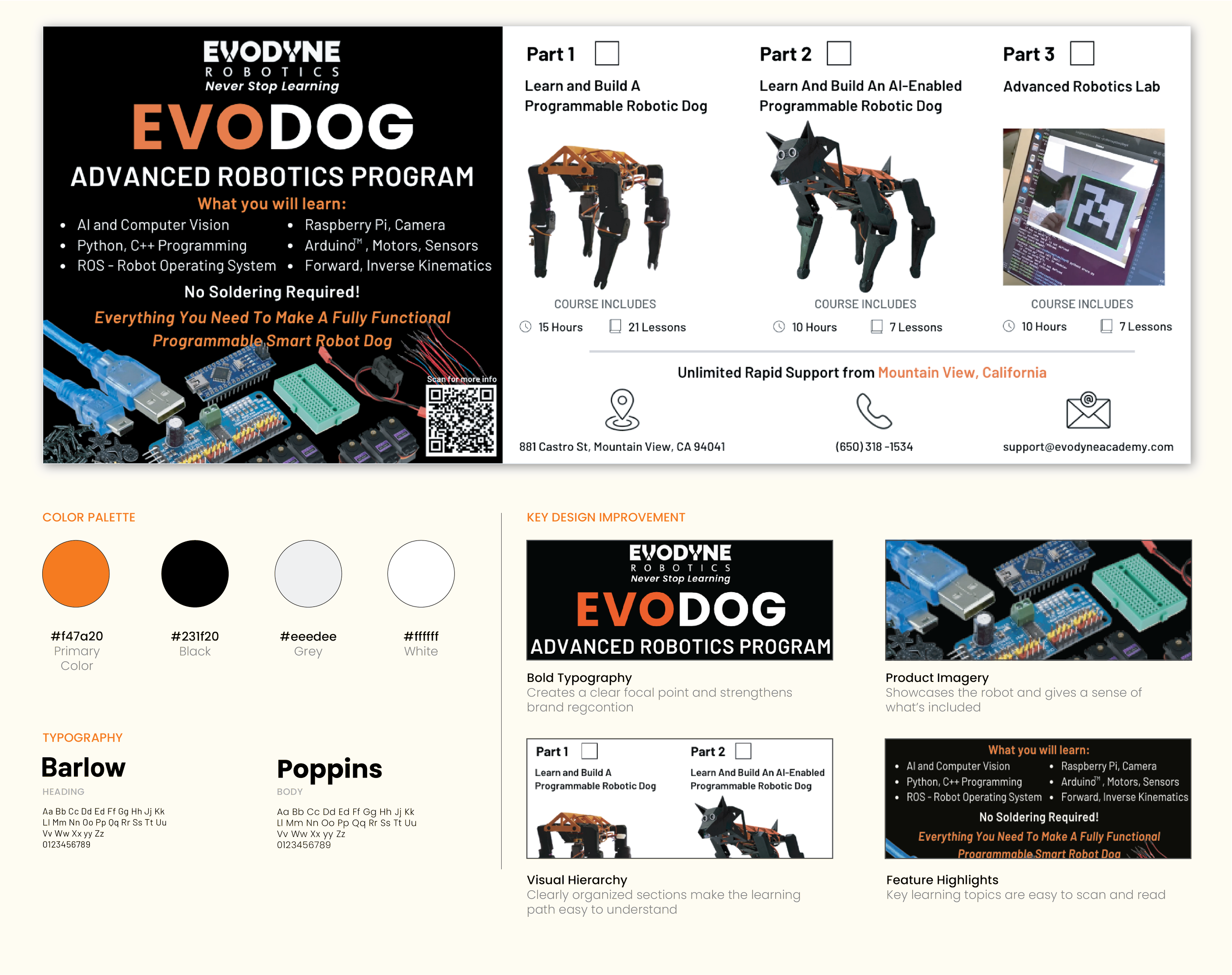
ONE DESIGN, MUTIPLE APPLICATIONS
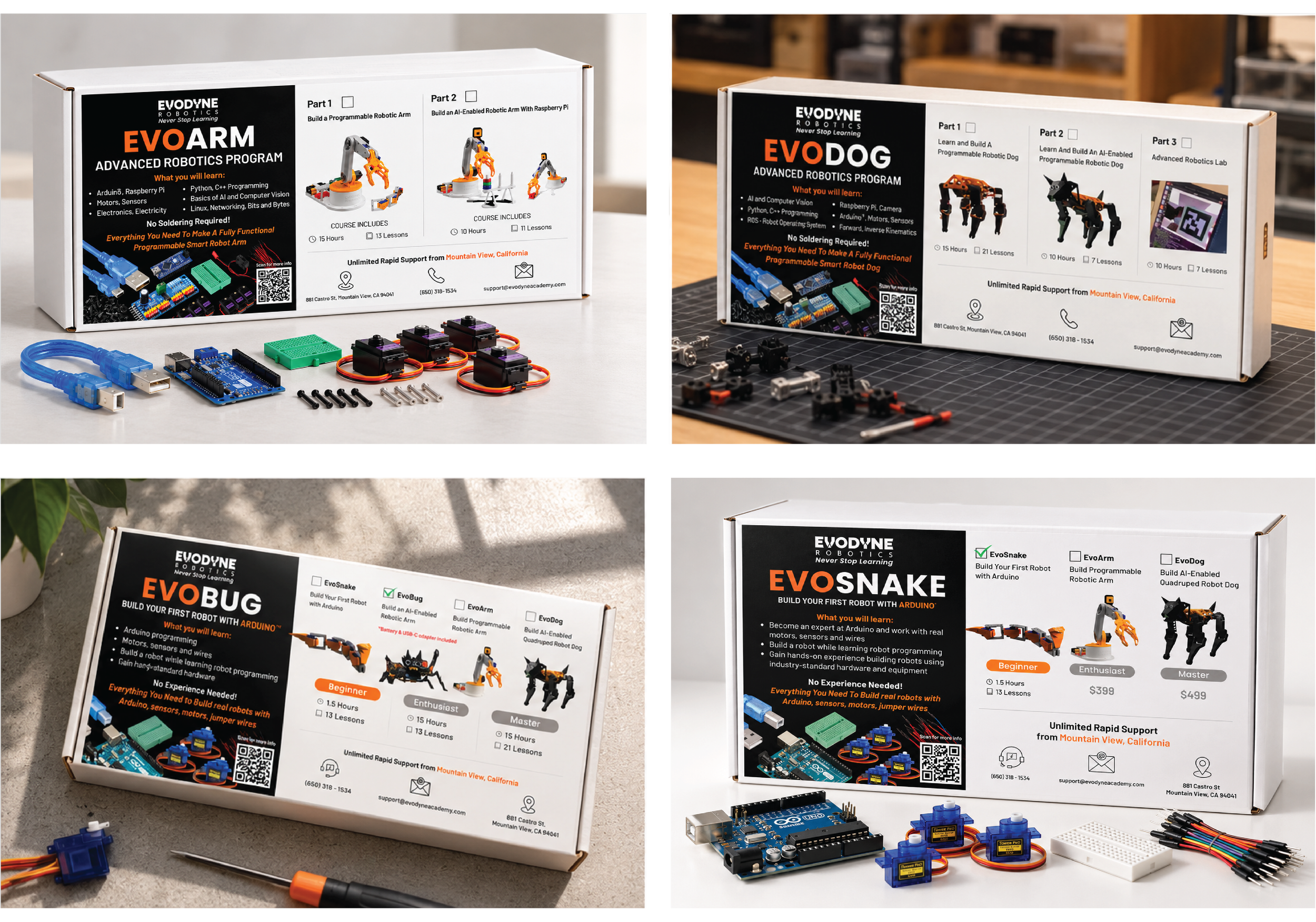
Applied a unified visual language across four kit labels, ensuring brand consistency while accommodating each product's unique features and information.
02 / KIT ORGANIZATION & ASSEMBLY SYSTEM
From Design through Production
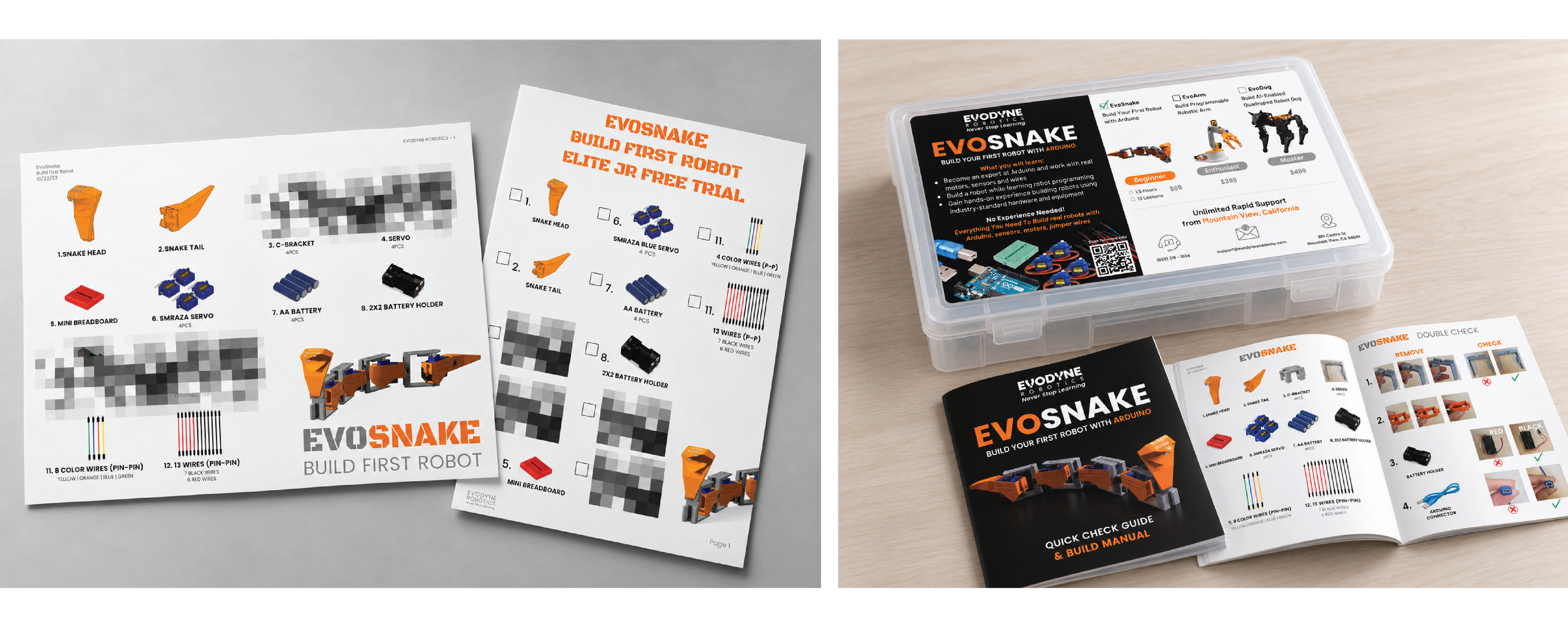
Beyond the exterior packaging, I developed a structured system of contents checklists and visual instructions to support the kit preparation process.
The materials guide team members through gathering components, performing quality checks, organizing parts, and packing finished kits. By combining clear information hierarchy with step-by-step visual guidance, the system was designed to make preparation more consistent and easier to follow.
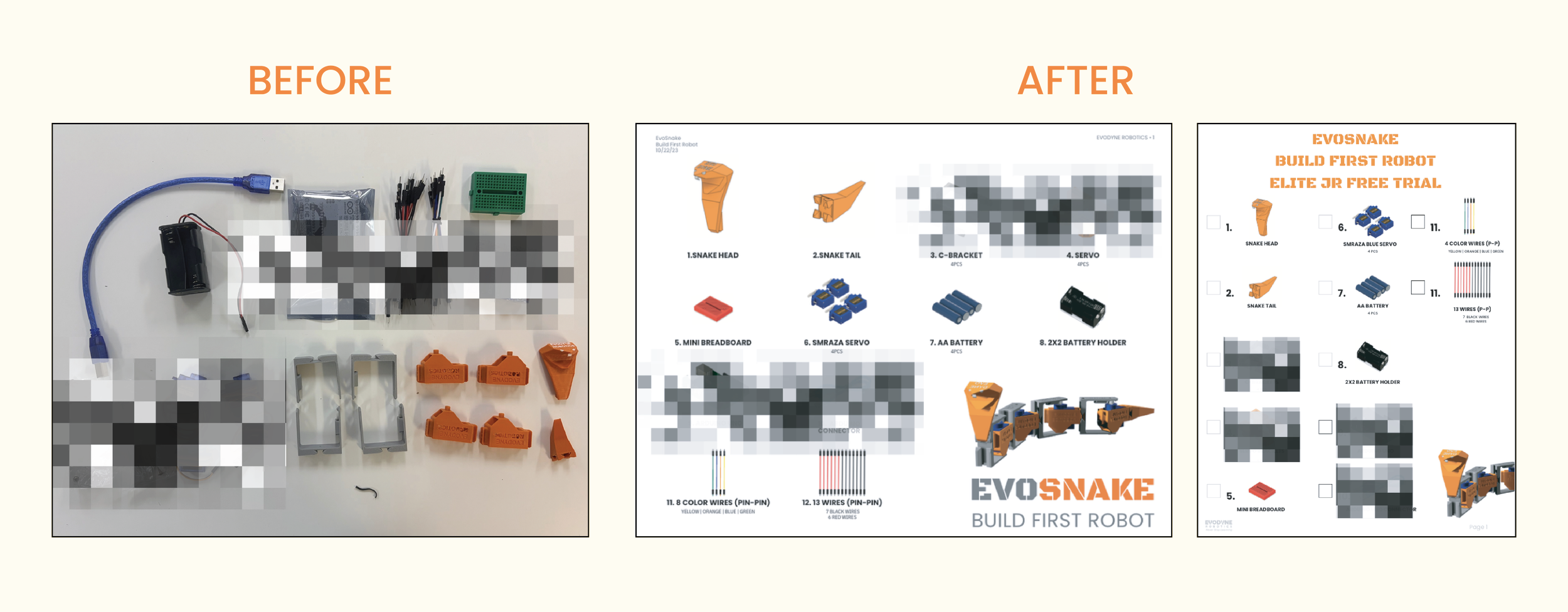
The Challenge
The original photo-based reference lacked a structured verification system, while complex 3D-printed components were difficult to identify through photographs alone.
The Solution
Developed two organized checklist designs featuring CAD-based component renderings exported from Autodesk Fusion. By combining clear technical imagery with structured layouts and verification fields, the redesigned checklists make component identification and kit preparation easier and more consistent.
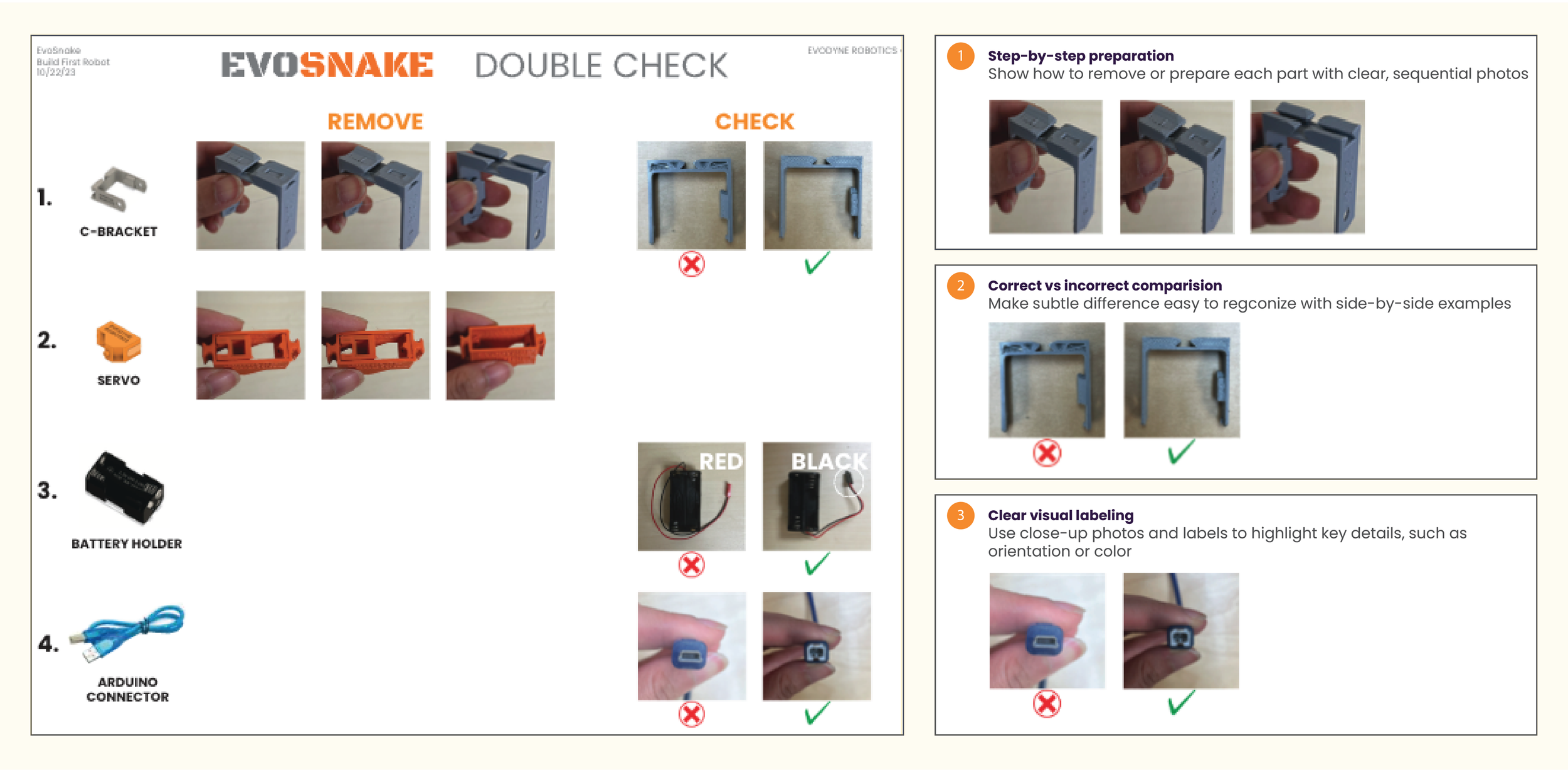
Quality Control Guide
Designed a visual quality control guide to help team members inspect and prepare robotics components before packing. By combining step-by-step photographs, component references, and clear correct-versus-incorrect examples, the guide makes technical inspection requirements easier to understand and follow.
LEARNING PROGRAM
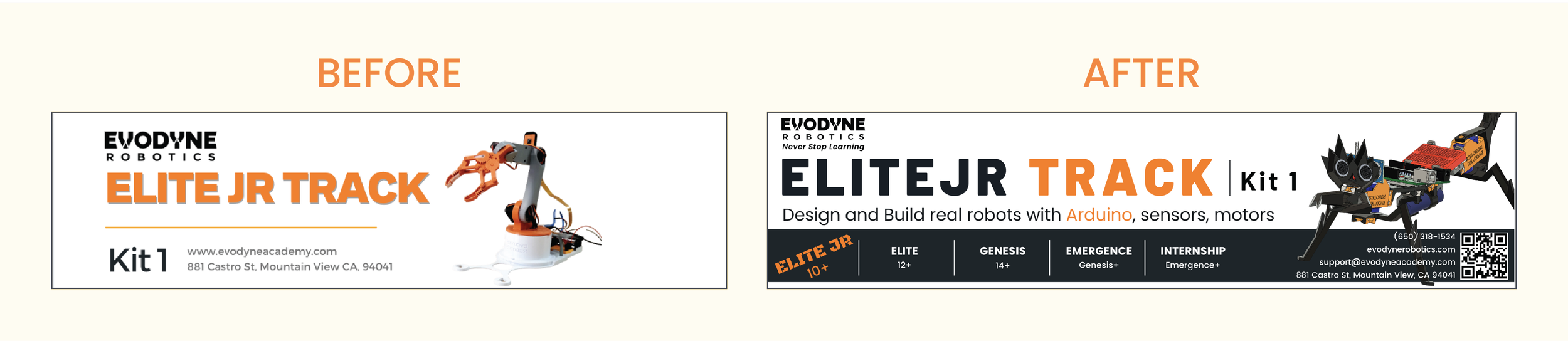
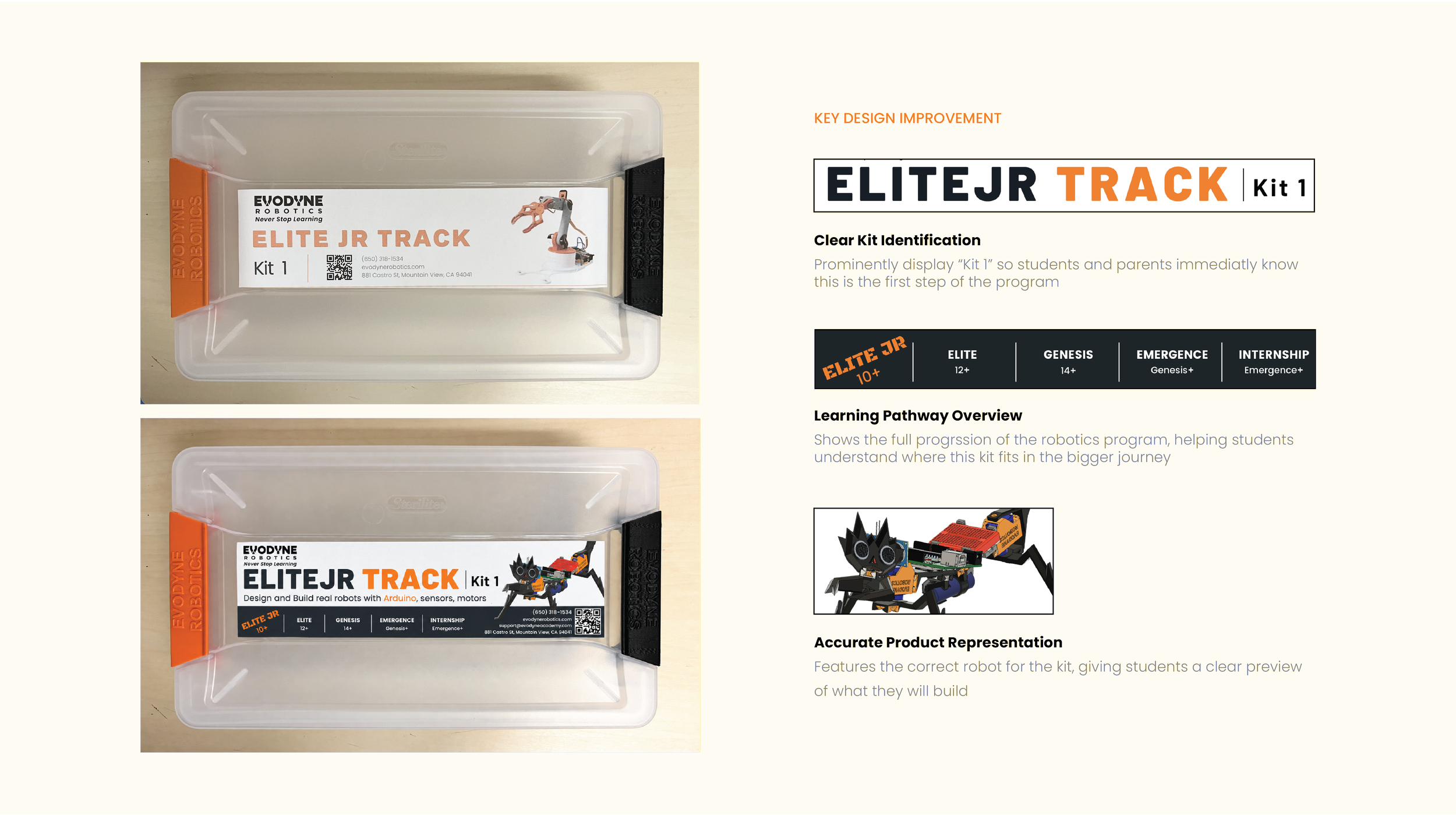
Redesigned educational robotics kit labels to create a cohesive visual system across Evodyne Robotics' learning programs. The project focused on improving product identification and communicating learning progression through clear information hierarchy, consistent branding, and engaging visuals.
The Challenge
The original label used inaccurate product imagery and lacked clear information about the learning program, making it difficult for students and parents to understand the kit's purpose and its position within the curriculum.
The Solution
Redesigned the label with accurate visuals, a prominent kit identifier, and a structured learning pathway to clearly communicate the student's current stage and future progression through the robotics program.
Outcomes
Developed a cohesive packaging and visual communication system that strengthened Evodyne Robotics' brand identity, improved product clarity, and standardized kit preparation.
The redesigned materials were implemented across 500+ educational robotics kits, supporting consistent production and a more engaging learning experience. The project also contributed to a 10% increase in conversion from free trials to student bookings.